
"produced in Central America"
3000 article(s) found

The advantages of Costa Rica in developing coffee what are the well-known coffee producing areas of Costa Rica?
Costa Rica, located in Central America, is bordered by Nicaragua to the north, Panama to the south, the North Pacific Ocean to the west and the Caribbean Sea to the east. It is the most advanced and economically developed country in Central America, and is the first Central American country to introduce coffee in historical records. Costa Rica, located in the Central American Gorge, has a number of high-altitude

The coffee-producing area of El Salvador, northwest of Central America and bordering the Pacific Ocean to the south, introduces the Iza of Sonsonate province.
In El Salvador, the coffee beans rich in the Kuskabapa region are the best, slightly lighter, fragrant, pure and slightly sour. Like Guatemala and Costa Rica, coffee in El Salvador is graded according to altitude, and the higher the altitude, the better the coffee. The best brand is Pip, whose quality has been recognized by the American Organic Certification Society. In addition

Starbucks Guatemala Antigua Coffee Guatemalan Vivette Nango from Central America
This is an elegant, rich and deep coffee, its delicate acidity is perfectly balanced with subtle cocoa texture and soft spice flavor. Origin: Latin American processing method: washing flavor: cocoa flavor, spice flavor acidity: medium mellow: medium food match suggestion: cocoa, apple, caramel, nut similar coffee: coffee elegant first choice

World Coffee Map-- A Collection of Information on Coffee producing areas in Central America and Honduras
For professional baristas, please pay attention to the coffee workshop (Wechat official account cafe_style) Honduras was not well known in the consumer market because of its lack of strong support in the handling and transportation of raw beans. In recent years, Hongguo has actively changed and expanded the coffee industry, which has gradually opened up the international popularity of Honduran coffee. Honduras harvests three hundred a year

Introduction of coffee beans in Nicaragua, the country with the worst economic conditions in Central America
Nicaragua | Nicaraguan Coffee Nicaragua coffee Nicaraguan Coffee beans w.kaf.name "Nicaragua is one of the major coffee producing countries and produces high quality coffee. Even coffee from the Antigua Mountains of Guatemala, which is famous in Asia, imports raw beans from Nicaragua. Nicaraguan coffee is not well known in Asia, but in fact, Nicaraguan coffee is already

Introduction to the world's three major coffee producing areas: American coffee estates and detailed explanation of coffee from each producing area
Coffee production in the Americas refers to Central America and South America, and the areas north of Mexico are basically non-producing coffee beans. Coffee production in the Americas is mainly distributed in the Tropic of Cancer to the equator, and several countries in Central America are basically coffee producing countries. Brazil, located in South America, is the world's largest coffee producer. Just like the spread of coffee, it cannot be separated from the era of great navigation.

Costa Rica, the first country in Central America to grow coffee, grows youdao.
For more information on coffee beans, follow the Coffee Workshop (official Wechat account cafe_style), the first country in Central America to grow coffee; government support for development began in Costa Rica in 1729, when it was introduced from Cuba. This made Costa Rica the first country in Central America to grow coffee and the first to grow coffee because of its commercial value.

Introduction of Coffee producing areas in Central America does Costa Rican coffee taste sweet
Professional coffee knowledge exchange more coffee bean information please follow the coffee workshop (Wechat official account cafe_style) Front Street-Costa Rica Coffee introduction Costa Rica is located in Central America, the climate and soil conditions are very suitable for coffee growth, with a history of two hundred years. In recent years, Costa Rica conforms to the market trend and makes great efforts to develop high-quality coffee. Do

Introduction of six coffee producing areas in Honduras in northern Central America
There are six main coffee producing areas in Honduras, including Santa Barbara, Copan, Ocotepeque, Lempira, La Paz and El Paraiso in the southeast. Honduran coffee tastes less acidic, while caramel is more sweet. The taste of coffee from these five different producing areas is also slightly different, some slightly sour.

Nicaraguan Coffee Flavor Manor in Central America introduction to boutique coffee beans
Managua, the capital of Nicaragua, is located in the west of the border, on the south bank of Lake Managua, hence its name. The northwest is 140 kilometers away from the Collinto seaport on the Pacific coast. 55 meters above sea level. It is a Spanish city with beautiful scenery. Because it is located to the east of the Pacific volcanic active seismic belt, there have been four strong earthquakes in the city in the past 100 years, including one in December 1972.
The Flavor characteristics of Coffee in Central America the name of coffee producing area and the flavor of coffee are introduced.
The flavor of Central and South American beans: generally speaking, the flavor is relatively regular. The Brazilian coffee is mellow and full-bodied, while the Costa Rican coffee is gentle and supple, with a blend of sour, sweet and chocolate aromas. Panamanian coffee has strong aromas of citrus, jasmine, peach and nectar, bright and changeable acidity, very similar to Yega Xuefei. Colombia (South America)
World Fine Coffee Producing Areas Central America Honduras Producing Areas Coffee Bean Characteristics
Famous representative coffee: honduran coffee seems strange to many coffee drinkers. Honduras is no less geographically well-placed to produce coffee than its coffee-producing neighbours, such as Guatemala and Nicaragua. Honduras, however, had a relatively high profile in the consumer market because it did not have strong support for raw bean handling and transportation.

Coffee bean producing area-Central America-Honduras (Honduras)
Well-known representative coffee: Honduran coffee seems strange to many coffee drinkers. When it comes to coffee production, the geographical conditions of Honduras are no less than those of neighboring coffee-producing countries such as Guatemala and Nicaragua. However, in the past, Honduras was more well-known in the consumer market because it did not have strong support in the handling and transportation of raw beans.

Panamanian Coffee Flavor Manor, the King of Coffee Price ratio in Central America, introduces Esmera.
Panama Coffee, the king of coffee price in Central America, has been among the best coffee producers in the world since three years ago, surprising countries that have been in the vanguard of developer production for many years. Panamanian coffee is mainly produced in the west near the Costa Rican border, producing the best washed coffee. Compared with coffee beans grown at low and middle elevations

The dispute between different levels of flavor in the coffee bean producing areas of Honduras in Central America
Professional coffee knowledge exchange more coffee bean information please follow the coffee workshop (Wechat official account cafe_style) front street-Honduras coffee producing area Honduras has complex terrain and diversified climate. Located in the coastal plain of Central America, it has a tropical rain forest climate, with an average annual temperature of 31 ℃. The mountain belongs to subtropical forest climate, the annual average temperature is 23 ℃, the rainy season is from June to November, the temperature is mild and rainy.
Coffee bean producing areas-Central America-Guatemala (Guatemala)
Well-known representative coffee: Antigua (Antigua), Vivette Nango (Huehuetenango) the latitude of Guatemala is about 15 degrees, adjacent to the Pacific Ocean on the left and the Caribbean Sea on the right. The Sierra Mountains on this side of the Pacific Ocean are the main coffee-growing areas in Guatemala. Because the mountains are very long and the regional climate changes are great, it has created the seven largest coffee producing areas in the country.
Coffee bean producing areas-Central America-Guatemala
Well-known representative coffee: Antigua (Antigua), Vivette Nango (Huehuetenango) the latitude of Guatemala is about 15 degrees, adjacent to the Pacific Ocean on the left and the Caribbean Sea on the right. The Sierra Mountains on this side of the Pacific Ocean are the main coffee-growing areas in Guatemala. Because the mountains are very long and the regional climate changes are great, it has created the seven largest coffee producing areas in the country.

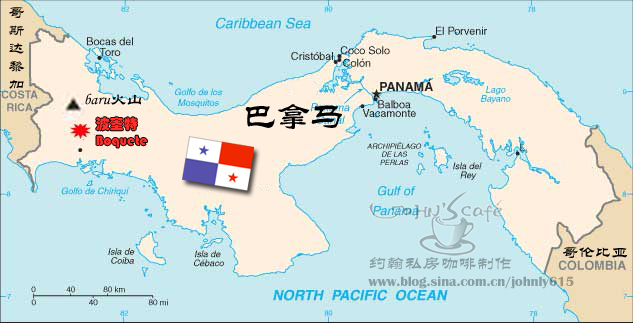
Panamanian Baru Volcano, one of the highest volcanoes in Central America
Panama has one of the highest volcanoes in Central America: Mount Baru. The Baru volcano has an altitude of more than 3474 meters, and the surrounding land is rich and balanced in nutrients, providing sufficient conditions for the planting and cultivation of Panamanian coffee. Cold air currents converge and flow above 2262 meters in the Central Mountains, resulting in multiple in the Bouquete and Volcan regions.

Coffee bean producing areas-Central America-Honduras
Well-known representative coffee: Honduran coffee seems strange to many coffee drinkers. When it comes to coffee production, the geographical conditions of Honduras are no less than those of neighboring coffee-producing countries such as Guatemala and Nicaragua. However, in the past, Honduras was more well-known in the consumer market because it did not have strong support in the handling and transportation of raw beans.
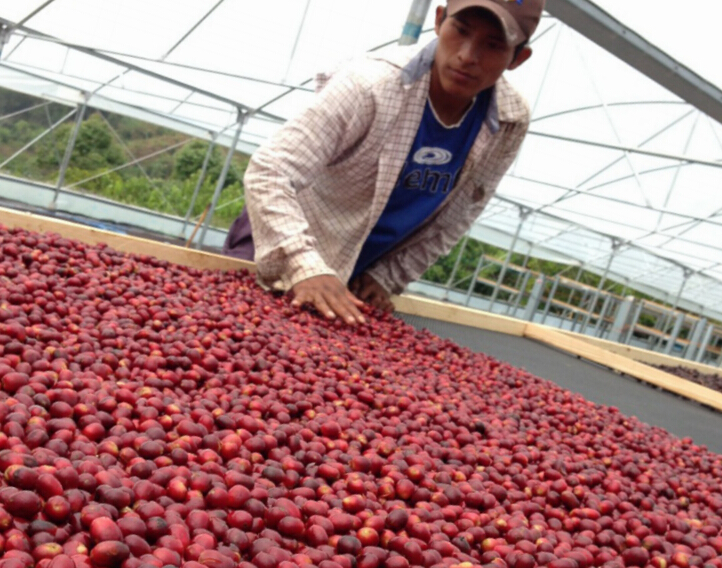
Hand net baked El Salvador Red bourbon El Salvador map and Guatemala Honduras adjacent Central America
Many coffee lovers will not know the country of El Salvador, which is located in Central America, bordered by Guatemala and Honduras in the north, and the Pacific coastline in the west and south. El Salvador is the smallest country in Central America and the most densely populated country in Central America. The topography is mainly mountainous and plateau, with many volcanoes. Santa Ana active volcano is 2385 meters above sea level.